
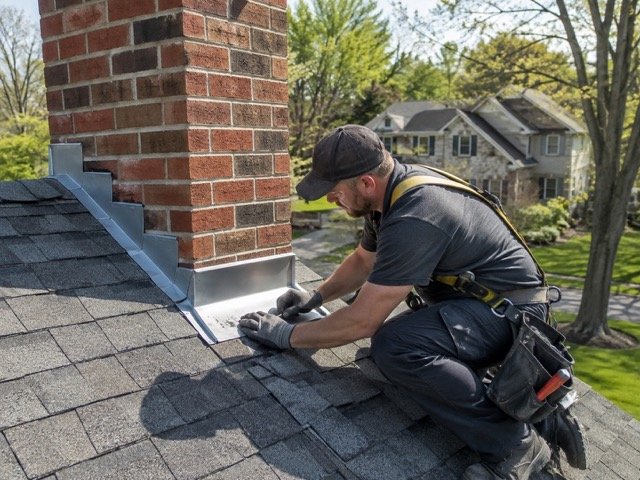
Chimney flashing repair in Bucks County, Pennsylvania may be needed when the weather-resistant connection between a chimney and roof begins to fail. Because this joint is exposed to rain, snow, wind, movement and repeated temperature changes, flashing problems are a common source of water intrusion around chimneys.
Properly installed flashing helps direct water away from the chimney-to-roof connection. When flashing becomes loose, corroded, improperly sealed or poorly integrated with the roof or masonry, water can enter the home and contribute to staining, damaged finishes and deterioration around the chimney.
Signs chimney flashing repair may be needed
Some flashing problems are visible from the roof, while others first appear as moisture inside the home. Common warning signs include:
- Water stains on a ceiling or wall near the chimney
- Leaks that appear after wind-driven rain
- Visible lifted, bent or missing flashing
- Cracked or deteriorated sealant around previous repairs
- Rust or corrosion on metal flashing
- Recurring moisture despite prior patching
- Loose flashing around the chimney base
- Moisture damage near the roofline or chimney masonry
How chimney flashing works
Chimney flashing typically uses overlapping pieces of metal integrated with the roofing system and chimney masonry to direct water away from the joint. Different roof pitches, roofing materials and chimney configurations can require different flashing details.
A typical flashing system may include base flashing installed with the roof and counterflashing integrated with the chimney masonry. These components are intended to work together so water moves over the roof surface rather than entering behind the flashing.
Chimney flashing repair versus replacement
Minor localized flashing problems may sometimes be repairable. Flashing that is badly corroded, improperly installed, loose, damaged or repeatedly failing may need more extensive repair or replacement.
The appropriate chimney flashing repair depends on the condition of the metal, roofing, sealants and surrounding masonry. Simply applying more caulk or roof cement may not provide a durable solution if the flashing itself is incorrectly installed or damaged.
The surrounding roof and masonry should also be checked because the visible flashing may not be the only source of water intrusion.
Flashing and masonry work often overlap
Counterflashing may be integrated into mortar joints on a masonry chimney. If those joints are deteriorated, masonry repair or repointing may be part of a lasting chimney flashing repair.
Cracked mortar, loose brick or deteriorated masonry near the roofline can make it difficult for flashing to remain secure and weather resistant. Addressing the masonry condition at the same time may help prevent recurring problems.
Chimney flashing repair and chimney leaks
Water around a chimney does not always mean the flashing is the only problem. Chimney leaks can also come from a cracked crown, missing chimney cap, deteriorated mortar joints, porous masonry or nearby roofing problems.
A thorough evaluation should consider the complete chimney and roof intersection. This helps identify whether chimney flashing repair is appropriate or whether additional repairs are needed to address the source of the leak.
Chimney flashing repair in Bucks County
Bucks County homes include a wide range of roof styles, masonry chimneys and older construction. Exposure to seasonal rain, snow, temperature changes and repeated freeze-and-thaw cycles can affect both chimney masonry and roof flashing over time.
Chimney flashing repair in Bucks County may be recommended when an inspection identifies loose metal, failed flashing details, deteriorated sealants or water intrusion around the chimney-to-roof connection.
The goal is to restore a durable, weather-resistant connection while also checking the nearby roofing and masonry for related problems.
Related chimney services
Chimney flashing FAQs
Can I tell from inside the house that the chimney flashing is leaking?
Interior stains can suggest a problem near the chimney, but they do not identify the exact source. Crown, masonry, flashing and nearby roofing problems can produce similar symptoms.
Is roof cement or caulk a permanent chimney flashing repair?
Patch materials may be useful in limited applications, but recurring leaks can indicate that the flashing detail itself needs repair or replacement. Repeatedly covering the area with sealant may hide rather than solve the underlying problem.
Does a roofer or chimney contractor repair flashing?
Both trades may work with chimney flashing depending on the scope. When masonry and flashing interact, the condition of both the roof and chimney should be considered.
Can chimney flashing fail even if it is not rusty?
Yes. Improper overlap, movement, loose sections, failed sealants or poor integration with roofing or masonry can cause leakage without obvious corrosion.
Should flashing be checked during chimney repair?
If the repair involves leaks, masonry near the roofline or other water-related issues, checking the flashing is a sensible part of the evaluation.
How do I know whether I need chimney flashing repair or replacement?
The decision depends on the condition of the flashing, roofing and surrounding masonry. Minor localized problems may be repairable, while extensive corrosion, poor installation or recurring leaks may require more complete replacement.